8 min read · Academy
10 Small Deck Ideas That Don't Skimp on Style
Ten practical small deck ideas, from built-in storage to picture-frame borders, with real dimensions, materials and cost notes.
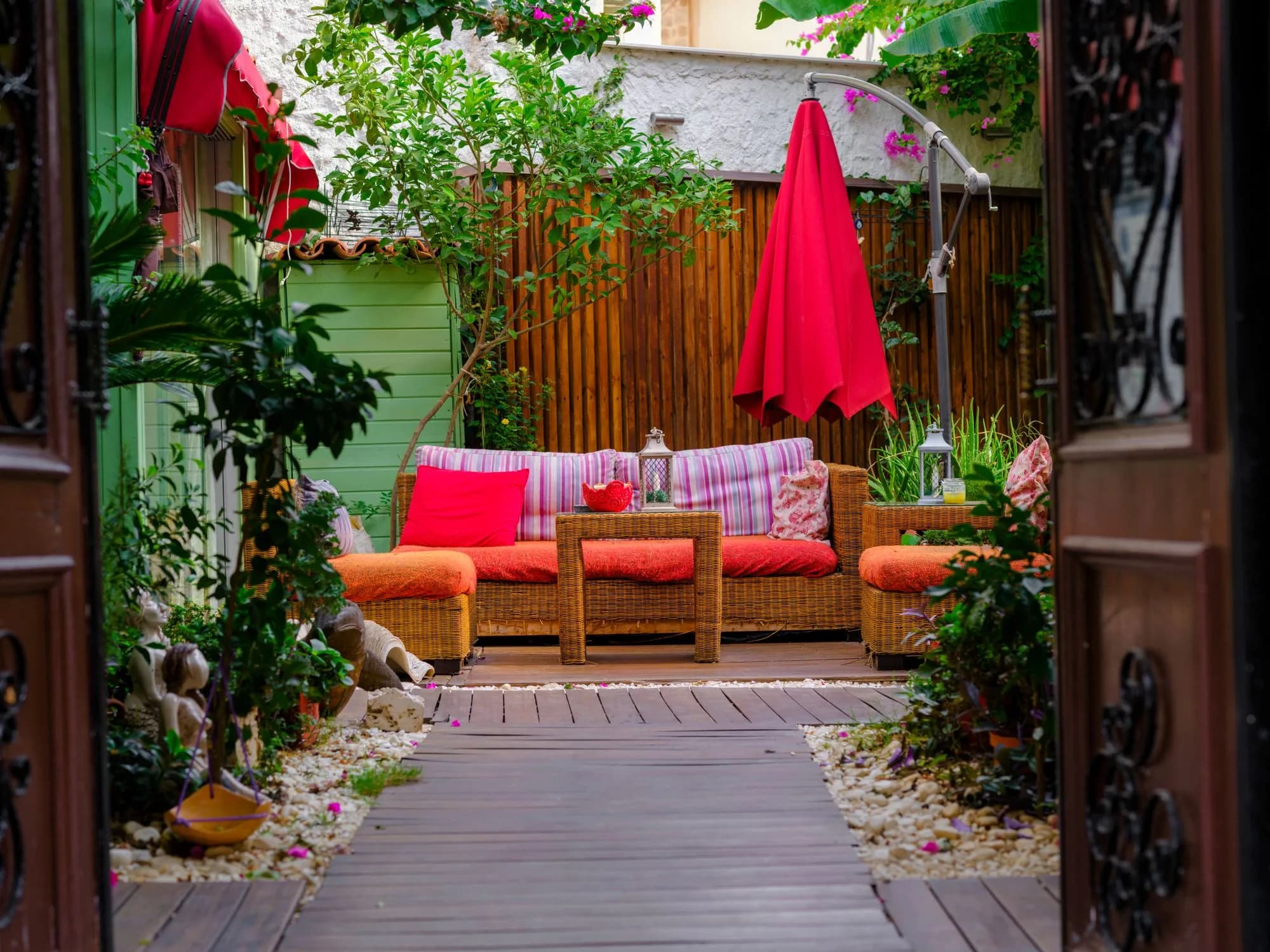
A tight backyard does not have to mean a boring deck. Good small deck ideas are less about square footage and more about squeezing extra function out of every board: seating that doubles as storage, a railing that keeps the view open, planting that softens the edges. Deck installation typically runs 30 to 60 dollars per square foot installed nationally in 2026, so a smaller footprint also means a smaller bill. Below are ten practical ways to make a compact deck feel bigger and work harder.
TL;DR
- Dual-purpose elements, like a bench that doubles as a guard, get the most value out of a small footprint.
- Built-in bench seating needs a 17-19 inch seat height, and its back must clear 36 inches if it doubles as a guard.
- A picture-frame border is the cheapest way to make a small deck look intentional, using the same material in a different pattern.
- Cable and horizontal-slat railing keep sightlines open, which matters more on a small deck than a large one.
- Sketch furniture and traffic paths before you finalise the footprint, not after.
1. Wrap-Around Bench Seating
Built-in bench seating along two or three edges of a small deck does the job of a whole patio set without eating the floor space a table and chairs would need. Build the seat at 17 to 19 inches high for comfortable sitting, and if the deck is more than 30 inches above grade, design the bench back to double as part of the required 36-inch guard rather than a separate rail behind it. A simple 2x4 frame with 5/4 decking boards on top costs a fraction of buying furniture, and the space underneath is free storage if you hinge the seat lid.
2. A Raised Planter Box Border
Framing the outer edge of a small deck with raised planter boxes, built from the same decking material, softens the hard lines and gives you a living privacy screen without the cost of a fence. Keep boxes around 12 to 18 inches deep for most perennials and small shrubs, and line them with landscape fabric before adding soil so moisture does not sit against the deck boards. It is a cheap upgrade, usually a few hundred dollars in lumber and soil, but it changes how the space feels within one growing season.
3. Built-In Storage Under the Boards
Low decks close to grade rarely have crawl space worth using, but any deck framed a couple of feet up can hide a genuinely useful storage box between the joists, accessed through a hinged panel of decking. It is the natural home for cushions, a hose, or folding chairs that would otherwise clutter the surface. Line the box with scrap decking or exterior ply and slope the bottom slightly so rainwater drains back out rather than pooling.
4. A Picture-Frame Border
Running a row of decking perpendicular to the main field, framing the outside edge like a picture frame, is one of the cheapest ways to make a small deck look intentional rather than accidental. It costs almost nothing extra in material, just a different cutting pattern, and it visually anchors the space, which matters more on a small deck where every sightline is close. Composite decking holds this detail especially well since the colour stays consistent board to board.
5. Why Not Split the Deck Into Zones With a Multi-Level Platform?
Lounge and dining areas remain the two most popular deck features nationally, according to Houzz's 2026 Outdoor Trends Study, so even a small deck benefits from treating them as distinct zones rather than one blended space. Even a foot of level change between a dining area and a lounge area can make a small deck read as two rooms instead of one. A single step down, built to the same 7.75-inch maximum riser height used in full staircases, is often all it takes. This trick works best on decks over about 160 square feet; anything smaller and the extra framing for a second level starts eating into usable space faster than it adds visual interest. Keep the framing simple by dropping the lower level onto its own footings rather than cantilevering it off the main structure, which keeps the load path straightforward for an inspector to check.
6. A Pergola or Shade Sail
Overhead shade turns a small deck from a spot you glance at into a spot you actually sit on through a hot afternoon. A pergola needs posts sized and footed properly, so if you are planning one, frame the beam to carry that extra point load from day one rather than retrofitting it later; check the numbers with a deck beam span calculator before you commit to post spacing. A canvas shade sail anchored to the house and a single post is the lighter, cheaper option if you are not ready for full pergola framing.
7. A Fold-Down or Built-In Table
A table that folds flat against the railing or a bench when not in use gives a small deck the flexibility of a much bigger one. Simple hinged brackets rated for outdoor use and a slab matching the floor decking keep it visually consistent, and you are not sacrificing walking space to a table that sits unused most of the week.
8. Should You Switch to Cable or Horizontal-Slat Railing?
Traditional baluster railing on a small deck can make the space feel boxed in, especially with the 4-inch sphere gap rule spacing balusters fairly close together. Cable railing or widely spaced horizontal slats meet the same code requirement while keeping sightlines open to the yard beyond, which makes a small footprint feel considerably larger. It costs more per linear foot than standard balusters, but on a small deck the total run is short enough that the difference is often only a few hundred dollars. Run the numbers for your exact perimeter through our deck railing calculator before ordering hardware, since cable systems need intermediate posts at shorter intervals than a standard baluster rail.
9. Slatted or Lattice Skirting
Hiding the framing and footings under a low deck with vertical slat or lattice skirting finishes the whole structure and stops the space underneath collecting leaves and stray toys. Leave a removable panel for access, since you will eventually need to check footings or run irrigation under there. It is a weekend job on most small decks and one of the cheapest ways to make the build look finished.
10. String Lights and an Outdoor Rug
Not every idea needs a saw. An outdoor-rated rug sized to the deck, strung lights along the railing, and a couple of weatherproof cushions turn bare boards into a room in an evening. It is the lowest-cost item on this list by a wide margin, and the easiest to change your mind about later.
| Upgrade | Typical Dimension | Material | Approx. Cost |
|---|---|---|---|
| Wrap-around bench seating | 17-19 in seat height, 16 in deep | 2x4 frame + 5/4 decking | $300-$700 |
| Raised planter border | 12-18 in deep boxes | Matching decking + soil | $200-$500 |
| Picture-frame border | Perimeter row, same board width | Composite or PT decking | +5-10% of decking cost |
| Cable railing | 3 in cable spacing | Stainless cable + posts | $40-$70 per linear ft |
| Pergola shade structure | 8x10 ft footprint (typical) | PT posts + beams | $1,500-$4,000 |
Small decks reward planning more than big ones do, because there is no spare square footage to absorb a mistake. Sketch your furniture and traffic paths before you finalise the footprint, not after, so built-in seating, planters or a fold-down table actually line up with how you will use the space.
Picture a couple replacing a cracked concrete slab behind a townhouse with a 10-by-12 deck. At 120 square feet there was barely room for a table, but a wrap-around bench freed up the middle for a small bistro set, a planter border hid the neighbour's bins, and a picture-frame edge in a darker composite made the whole thing look pricier than the material bill suggested.
“On a small deck every detail carries more visual weight, so a bench that doubles as a guard rail or a planter that hides the skirting earns its keep twice over, once for function and once for how finished the whole build looks.”
How small can a deck be and still feel usable?
Most builders find somewhere around 100 to 120 square feet is the practical floor for a deck with both seating and a walking path, though a bench-lined deck as small as 80 square feet can still work if it is designed around fixed seating rather than loose furniture.
Do small decks still need a permit?
Usually yes if they are attached to the house or more than a step or two above grade; our guide on whether you need a permit to build a deck covers the general thresholds, though it is always worth checking with the local building department.
What is the cheapest way to upgrade a small deck?
String lights, an outdoor rug and a coat of stain or sealer cost very little and change the feel of the space almost immediately, while a picture-frame border is the cheapest structural upgrade since it uses the same materials in a different pattern.
Does built-in bench seating count toward the guard rail requirement?
It can, provided the top of the bench back or a rail above it reaches the standard 36-inch guard height where the deck is more than 30 inches above grade; a bench alone at seat height does not meet that requirement on its own.
How much does a small deck cost to build?
Expect the same 30 to 60 dollar per square foot range as any deck, so a 120-square-foot deck typically lands between about 3,600 and 7,200 dollars depending on material and railing choices; run your own numbers through our deck cost calculator once you have picked a footprint.
Pick two or three ideas that match how you actually use your yard rather than trying to fit all ten in, then run the footprint through our deck cost calculator to see how the numbers land before you buy materials.
Size your deck to code, free
Put these numbers into the deck cost calculator and get a code-compliant answer in seconds.
Open the Deck Cost calculator →