8 min read · Academy
Deck vs Patio: Which Is Right for Your Yard?
Compare deck vs patio costs, maintenance, drainage and resale value to work out which suits your yard's slope and budget best.
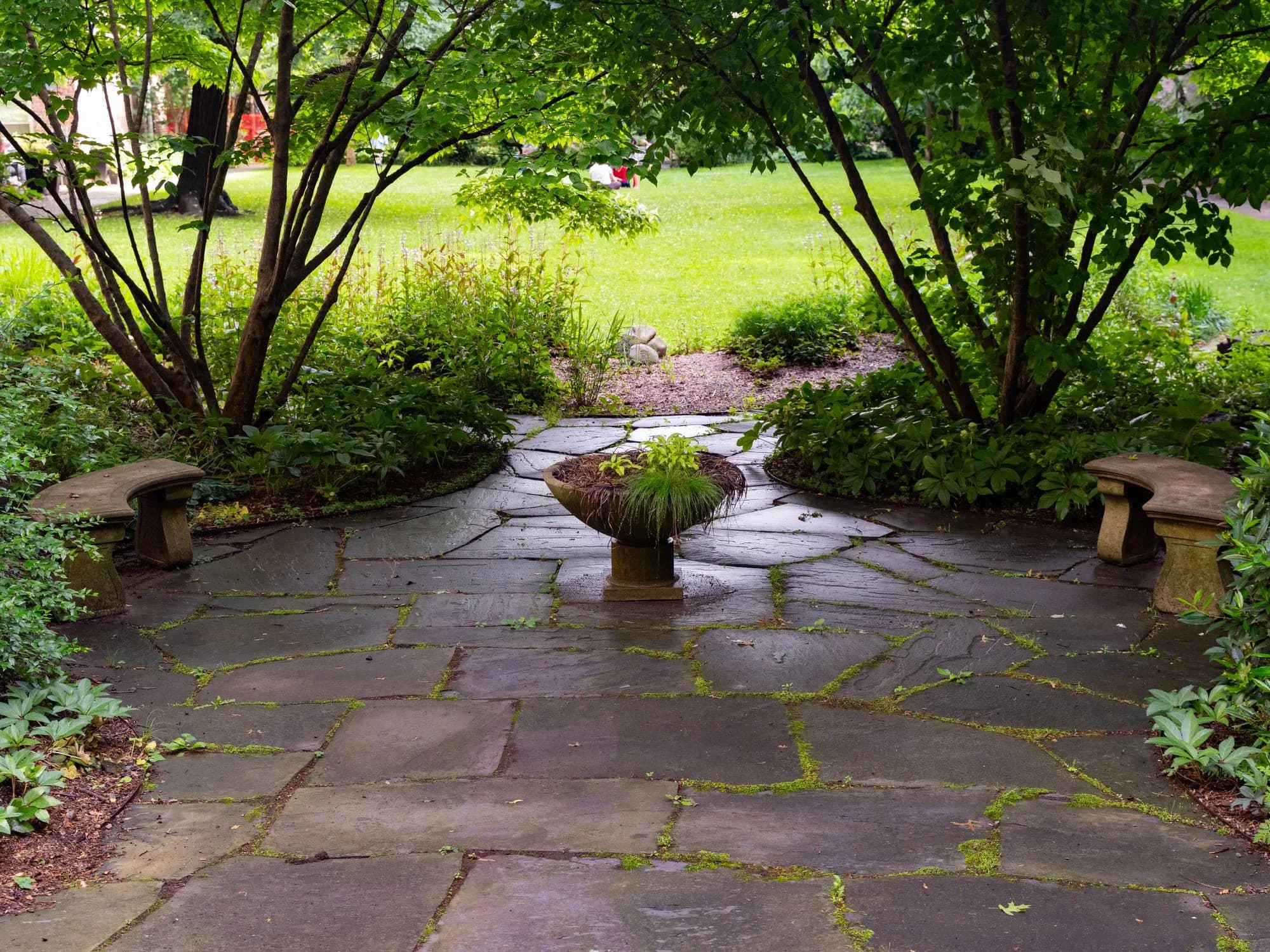
Two homeowners on the same street can stand in near-identical backyards and land on opposite answers to the deck vs patio question, and both can be right. A patio, laid flat with pavers or poured concrete, suits a level yard and a tight budget. A deck, built up on posts and joists, earns its keep on sloped ground or over drainage-poor soil where a patio would just become a puddle. Cost, maintenance, drainage and how the ground behaves under your feet all pull the decision in different directions. This guide walks through the real trade-offs so you're choosing based on your yard, not your Pinterest board.
TL;DR
- Patios generally cost less upfront than decks, but a sloped or drainage-poor yard can make a patio far more expensive to grade properly.
- Decks need footings and framing (see the deck footing calculator); patios need a compacted, well-drained base instead.
- Wood decks need restaining every 1-3 years; concrete and paver patios need occasional joint sand or sealant top-ups, not annual attention.
- Deck additions return roughly 65.8%-82.9% of cost at resale depending on material, per the 2025 Cost vs. Value Report.
- Sloped yards favour decks, flat and well-drained yards favour patios — check your grading before you pick either.
What's the Difference Between a Deck and a Patio?
A deck is a raised, framed structure, usually built from pressure-treated lumber or composite boards, supported on posts, beams and joists set above the ground. A patio sits directly on the earth, built from poured concrete, pavers, flagstone or gravel, and doesn't need any structural framing to hold your weight. That single difference explains almost everything else in this comparison. A deck can span a slope, clear a basement walkout, or sit several feet above a hillside because it's engineered like a small bridge. A patio can only go where the ground is already reasonably flat, or where you're willing to bring in fill and regrade. Both give you outdoor living space, and both can be dressed up with railings, pergolas or built-in seating, but the way they meet the ground is fundamentally different, and that shapes cost, drainage and how long they last.
Deck vs Patio Cost: Which Is Cheaper to Build?
On a flat, accessible yard, a patio is usually the cheaper build. Simple gravel or paver patios often land at the low end of outdoor project budgets, while poured concrete sits a bit higher once you add finishing and reinforcement. Decking costs more per square foot because you're paying for framing lumber or composite boards, hardware, and more labour hours. Nationally, deck installation typically runs $30-60 per square foot installed, with materials alone ranging from about $3-6 per square foot for pressure-treated pine up to $10-20 for exotic hardwood, and labour making up roughly $15-35 per square foot of that total, according to Angi. NerdWallet reports similar ranges. Run your own numbers with the deck cost calculator before committing either way, because size, height and material swing the total more than the deck-vs-patio choice itself. For a fuller breakdown, see our deck cost per square foot guide.
Footings and Foundations: What's Underneath Each One
A deck's cost and complexity below the surface come down to footings. Each support post needs a footing sized so its area, in square feet, covers the load coming down through that post divided by your soil's bearing capacity, commonly assumed at 1,500 psf for typical sand, silt or clay under IRC R507.3. Those footings also have to sit below your local frost line, which might be around 12 inches in the Deep South or up to 42 inches or more in parts of the Midwest. That's excavation, concrete and inspection time a patio simply skips. A patio's foundation is a compacted gravel or sand base, typically several inches deep, topped with a sand-setting bed for pavers or a reinforced slab for poured concrete. There's no frost-depth footing requirement in the same way, though patios in freeze-thaw climates still need a solid, well-compacted base to resist heaving. Check footing sizing with the deck footing calculator if you're leaning toward a deck.
Drainage and Grading: Why Your Slope Decides a Lot
Water is where patios can quietly go wrong. A patio needs to be graded at roughly a 1-2% slope away from the house so rainwater sheets off instead of pooling against the foundation. Get that wrong and you end up with standing water, cracked pavers from freeze-thaw cycling, or a soggy lawn every spring. A deck, sitting up on posts, mostly sidesteps this problem. Water runs straight through the gaps between boards and soaks into the ground below, so uneven or poorly draining soil is far less of a dealbreaker. This is one of the clearest reasons decks make sense on yards with heavy clay soil or low spots that never quite dry out. If your yard holds water after a storm, a deck avoids a problem a patio would inherit.
Maintenance: What You're Signing Up For Long-Term
Wood decking needs restaining or sealing every one to three years to stop the boards greying, cupping or splitting. Composite decking skips that entirely, though it costs more upfront; our composite decking vs wood cost comparison breaks down the long-term maths. Either way, a deck also needs an annual check of fasteners, ledger flashing and joist hangers for rust or rot. Patios are lower-maintenance in the sense that pavers and concrete don't rot, but they're not maintenance-free. Paver joints lose their sand over a few years and need topping up, weeds find their way into cracks, and concrete can develop hairline cracks from ground movement that occasionally need sealing. Neither surface looks after itself, but a patio's upkeep is mostly cosmetic, while a neglected deck's upkeep is eventually structural.
Does a Deck or Patio Add More Resale Value?
Deck additions return roughly 65.8% to 82.9% of their cost at resale, depending on the material used, according to the 2025 Cost vs. Value Report. Patios aren't tracked in that same report as a standalone national category, but appraisers and agents generally treat a well-built patio similarly to other hardscaping: it adds curb appeal and usable space without the depreciation risk of ageing lumber. In practice, the bigger driver of resale value isn't deck versus patio at all, it's condition. A ten-year-old wood deck with grey, splintering boards can actively hurt a sale, while a clean paver patio or a well-maintained composite deck both help. If resale is your main motivation, budget for the material and upkeep that will still look good when you eventually list the house, not just the cheapest option today.
When Does a Deck Clearly Win?
Choose a deck when your yard slopes, when you want to sit above a walkout basement, when the ground below drains poorly, or when you want a raised platform that connects to an upper floor without a long run of steps. Decks also make sense if you want built-in seating, a pergola, or a structure that can eventually carry a hot tub, though that last one needs its own engineering, not standard deck tables. If you're building over uneven or rocky ground, a deck's post-and-footing system adapts far more easily than trying to cut and fill a patio base.
When Does a Patio Clearly Win?
Choose a patio when your yard is already flat, when your budget is tighter, or when you want a surface with essentially zero structural maintenance. Patios also tend to suit outdoor kitchens, fire pits and heavy furniture better, since you're building on solid ground rather than a framed structure with its own load limits. If you're not in a rush and your soil drains reasonably well, a patio gets you outdoor living space for less money and less long-term fuss.
| Factor | Deck | Patio |
|---|---|---|
| Typical install cost | $30-60/sq ft installed | Generally lower on flat ground |
| Best suited to | Sloped or uneven yards | Flat, well-drained yards |
| Foundation needed | Footings below frost line | Compacted gravel/sand base |
| Drainage handling | Water passes through boards | Needs 1-2% slope grading |
| Maintenance cycle | Restaining every 1-3 yrs (wood) | Joint sand/sealant top-ups |
| Resale return | ~65.8-82.9% of cost | Varies, tracked as hardscaping |
“The biggest mistake we see is homeowners picking a deck or a patio based on price alone, then fighting their own yard's drainage for the next ten years. Match the structure to the slope first, budget second.”
Is a deck or a patio cheaper to build?
On flat ground, a patio is usually cheaper because it skips footings and framing. Once your yard slopes or drains poorly, a patio needs expensive regrading and retaining work, which can flip the cost advantage toward a deck. Use the deck cost calculator to compare against local patio quotes.
Do decks or patios last longer?
A well-built concrete or paver patio can outlast a wood deck by decades, since it isn't exposed to rot or fastener failure. Composite decking closes that gap considerably, with many manufacturers offering 25-50 year limited warranties, but it still relies on a structural frame underneath that needs periodic inspection.
Can I build a deck on a sloped yard without levelling it first?
Yes. That's actually the main advantage of a deck: it's engineered to span uneven or sloped ground on its own footings, without needing the earth beneath it graded flat first.
Does a patio need a permit like a deck does?
It depends on your jurisdiction and the patio's height and size, but many raised or attached patios do require a permit, especially if retaining walls are involved. Always check with your local permit guide and building department before starting either project.
There's no universal winner in the deck vs patio debate, only the option that fits the yard you actually have. Walk your site after the next heavy rain and watch where the water goes; that alone tells you more than any price comparison. If the ground is flat and drains well, a patio will likely save you money. If it slopes, floods, or drops away from the house, a deck earns its higher price tag by solving problems a patio can't. Run the numbers for your footprint with the deck cost calculator before you break ground.
Size your deck to code, free
Put these numbers into the deck cost calculator and get a code-compliant answer in seconds.
Open the Deck Cost calculator →