6 min read · News
2026 Backyard Trends: What the Data Says
Houzz's 2026 Outdoor Trends data shows what's changing in backyard builds, and what it means for anyone planning a deck this year.
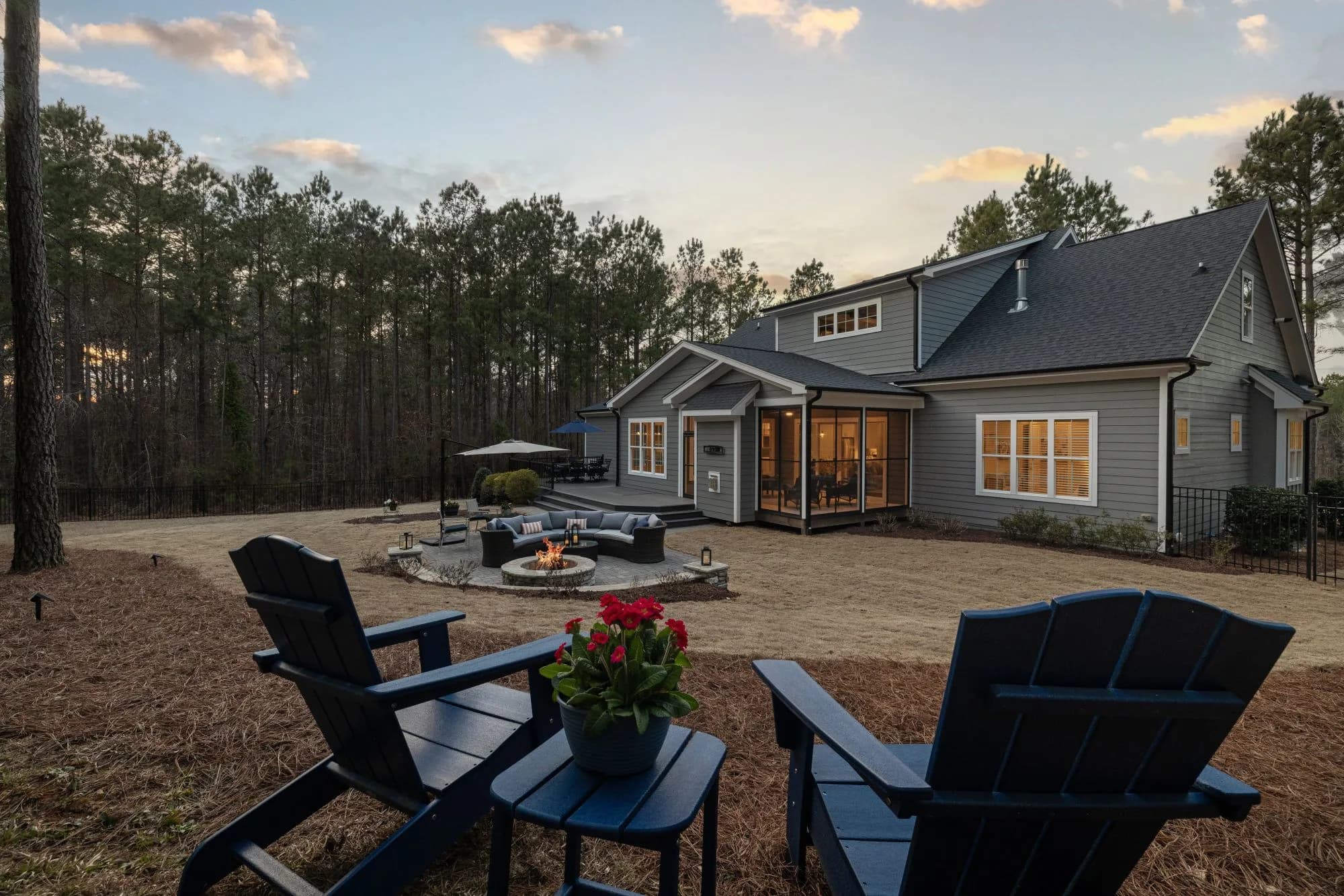
The backyard trends 2026 data just landed, and it tells a clearer story than usual about how people are actually using their outdoor space. Houzz's 2026 U.S. Outdoor Trends Study, based on responses from nearly 1,200 homeowners renovating an outdoor space, found 71 percent hired at least one professional, up from 65 percent in 2024. That single number, more than any style trend, is the headline: outdoor projects are getting more ambitious, and homeowners increasingly want someone qualified checking the framing. Here is what the rest of the data says, and what it means if you are planning a deck build this year.
TL;DR
- 71% of homeowners renovating an outdoor space hired at least one professional in 2026, up from 65% in 2024.
- Everyday-living motivation rose to 25% (from 22%); resale-value motivation fell to 15% (from 18%).
- Shade structures appeared in 35% of projects, up 15 percentage points.
- Outdoor kitchens are now built from scratch in 95% of projects, up 7 points.
- Lounge areas (83%) and dining areas (55%) remain the two most common deck features.
What Changed in 2026, According to the Data
Beyond the rise in professional hiring, the Houzz study found a real shift in why people are building at all. The share of homeowners renovating mainly for everyday living rose to 25 percent, up from 22 percent in 2024, while the share renovating mainly for resale value dropped to 15 percent, down from 18 percent. People are building decks to actually live on them, not just to list a box on a real estate flyer. That shift shows up in the features people are choosing too: shade structures appeared in 35 percent of projects, up a full 15 percentage points, and outdoor kitchens built from scratch rather than bought as a kit now make up 95 percent of outdoor kitchen projects, up 7 points. None of those numbers move by accident. A pergola, a full outdoor kitchen or a custom-built dining zone all require more planning up front than a basic rectangle of decking ever did, which is likely a big part of why the professional-hire rate climbed alongside them.
Why Are More Homeowners Hiring Professionals?
Part of the answer is simply that bigger, more ambitious projects carry more risk of getting something structurally wrong. A shade structure or an outdoor kitchen adds real point loads and connection details that a straightforward open deck does not have, and homeowners seem to be recognising that a framing mistake under a pergola or a built-in grill island is a lot more expensive to fix after the fact than to get right during design. It also tracks with rising material costs: framing lumber prices were up 1.4 percent week over week in early July 2026, and 5.1 percent year over year, according to NAHB data, the highest reading since August 2025. When lumber costs more, a bad cut or an under-specified beam costs more too, and that raises the value of a second set of trained eyes before the saw comes out. If you would rather bring in that second set of eyes than gamble on a DIY layout for a complex project, our find a deck builder directory is a reasonable starting point for getting a local, licensed quote before you commit to a design.
The Shift From Resale Value to Everyday Living
A deck built to impress a future buyer and a deck built for your own Tuesday evenings are not quite the same project. Resale-minded builds tend to chase whatever looks good in photos: clean sightlines, neutral colours, minimal clutter. Everyday-living builds care more about where the shade falls at 6pm, whether the grill is close enough to the kitchen door, and whether there is somewhere to actually sit with a coffee before anyone else is awake. If you are in the 25 percent building primarily for your own use, it is worth designing around your actual daily routine rather than a showroom layout, since that is the detail a future buyer will never notice but you will feel every single day.
Shade Structures Are Having a Moment
A 15-point jump in shade structures is the single biggest swing in this year's data, and it has a direct framing implication. If there is any chance you will want a pergola, a shade sail anchor, or even a retractable awning down the line, plan the attachment point now. That means checking your beam is sized to carry the extra point loads a pergola post introduces, not just the joists and decking above it; run the numbers through our deck beam span calculator before you finalise post spacing, because retrofitting a beam after the deck is built is a much bigger job than adding two bolts during framing.
Lounge and Dining Zones Are Eating the Floor Plan
Lounge and seating areas remain the single most common feature at 83 percent of projects, followed by dining areas at 55 percent, quiet retreats at 53 percent, gardening areas at 49 percent, and outdoor cooking at 48 percent. Read together, that is a picture of decks doing several jobs at once rather than one big open platform. The practical takeaway is to size a deck around furniture zones and traffic paths, not just a total square footage target. A 300-square-foot deck built around a dining table, a lounge corner and a narrow walking path feels completely different from the same 300 square feet left open, and it costs the same to build. Picture a family replacing a plain 12-by-16 rectangle: instead of one open slab, they split it into an 8-by-10 dining corner near the kitchen door and a smaller lounge nook angled toward the garden, with a 3-foot path between them. Same lumber order, same footing count, but the deck gets used every evening instead of just on the Fourth of July.
What About Materials and Cost in 2026?
Deck installation still typically runs 30 to 60 dollars per square foot installed nationally this year, and the 2025 Cost vs. Value Report puts a deck addition's resale return somewhere between 65.8 and 82.9 percent of its cost, depending on material and region. With framing lumber trending upward through the middle of 2026, pricing your project early and locking in material costs before a build, rather than partway through, is worth the extra planning step. Our pressure-treated lumber prices guide tracks where framing costs are heading if you want the fuller picture before you budget.
| Feature | Share of Projects | Change vs 2024 |
|---|---|---|
| Lounge / seating areas | 83% | Most common feature |
| Dining areas | 55% | -- |
| Quiet retreats / reading areas | 53% | -- |
| Gardening areas | 49% | -- |
| Outdoor cooking areas | 48% | -- |
| Shade structures | 35% | +15 points |
| Outdoor kitchens built from scratch | 95% of kitchen projects | +7 points |
“Every year the features move around a bit, but this year's data is unusually consistent: homeowners are investing in structures that need real engineering, shade, kitchens, multi-use zones, which is exactly why we are seeing more permit-pulled, professionally designed projects instead of weekend add-ons.”
Why did more homeowners hire professionals for outdoor projects in 2026?
The Houzz data points to more ambitious project scope: shade structures and built-from-scratch outdoor kitchens both add real structural and electrical complexity that most homeowners are not equipped to handle solo, plus rising material costs raise the stakes of getting a cut or a span wrong.
Are outdoor kitchens worth building in 2026?
With 95 percent of outdoor kitchen projects now built from scratch rather than bought as a kit, custom builds are clearly the norm, though they carry higher upfront design and permitting costs than a prefabricated kit island.
How do shade structure trends affect deck framing?
If a pergola or shade sail is even a future possibility, size your beam and plan post locations for the extra point loads now; check spans with our deck beam span calculator rather than assuming the joists alone can carry an add-on later.
Is resale value still a reason to build a deck?
It is: decks still return roughly two-thirds to over four-fifths of their cost at resale according to the 2025 Cost vs. Value Report, but it has slipped to third place behind everyday living and general home enjoyment as homeowners' main motivation.
Planning a 2026 build around these numbers is mostly a sizing and sequencing exercise: figure out which zones matter to you, size the deck and beam for them from the start, and run the footprint through our deck cost calculator before you commit to a final plan.
Size your deck to code, free
Put these numbers into the deck cost calculator and get a code-compliant answer in seconds.
Open the Deck Cost calculator →