7 min read · Academy
Deck Footing Size and Depth, Explained
How to work out deck footing diameter from post load and soil bearing, and how deep footings must go below the frost line in your state.
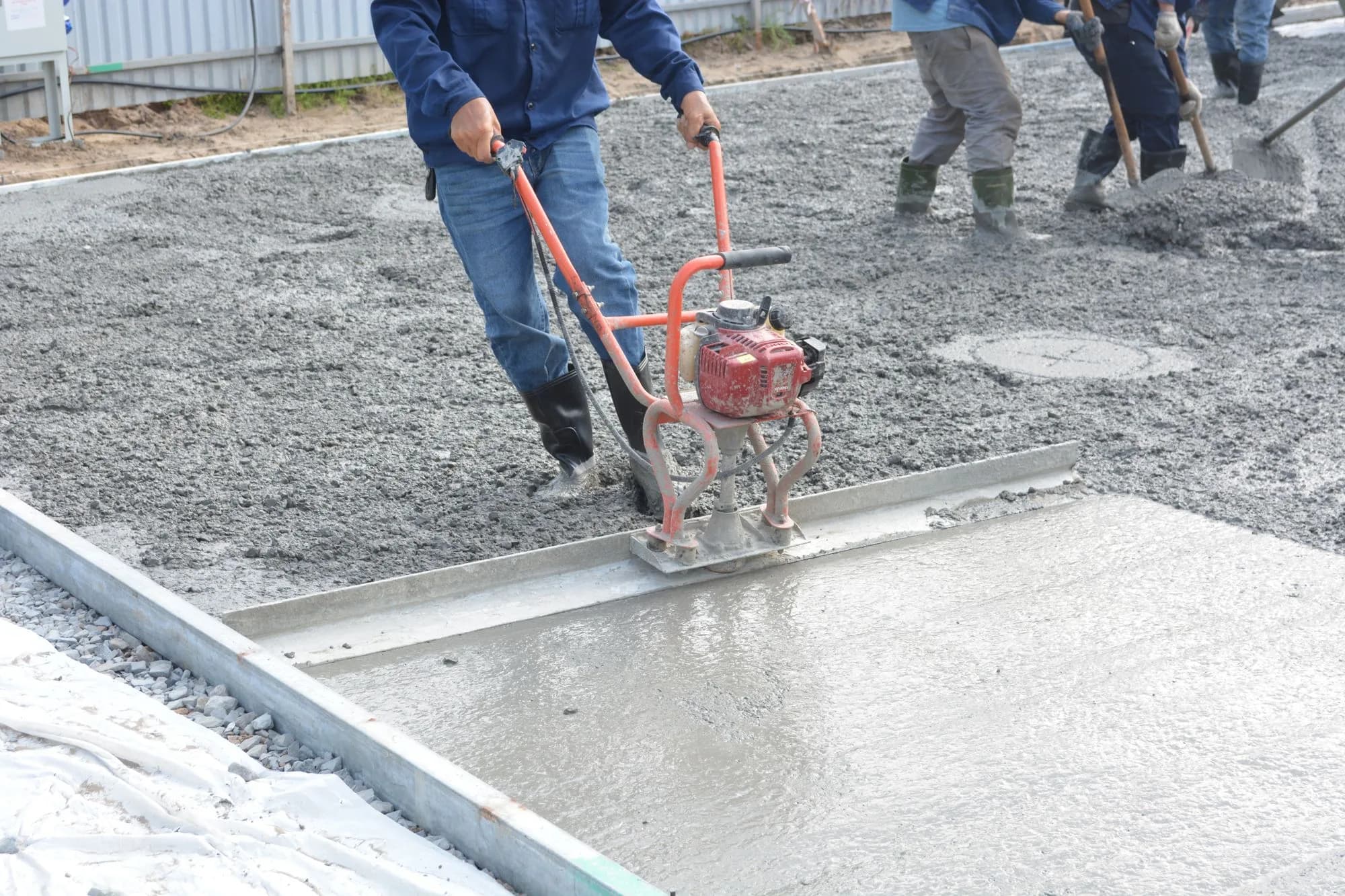
A deck footing has one job: spread the weight of the deck above it across enough soil that the ground doesn't compress, shift or heave. Get the deck footing size wrong and the symptoms show up slowly — a post that settles half an inch a year, a corner that starts to lean. The IRC gives a straightforward formula for footing size, plus depth rules tied to your local frost line, so you never have to guess.
Below, we work through the maths with real numbers, cover how deep footings need to go depending on where you live, and compare poured footings against precast deck blocks and sonotubes.
TL;DR
- Footing size comes from a simple formula: post load divided by soil bearing capacity, using the IRC's presumptive 1,500 psf value for ordinary sand, silt or clay under R507.3.
- Footing depth is set by the local frost line, from about 12 inches in the frost-free South to 36-48 inches across the Midwest and up to 60 inches in the upper Midwest and New England.
- Tributary area, the share of deck load each post actually carries, is what turns joist and beam spans into a post load figure in pounds.
- Even frost-free regions still need footings roughly 12 inches deep to reach firm, undisturbed soil.
- Run your own numbers through the deck footing calculator rather than copying a neighbour's footing size — soil and frost depth both vary block to block.
What Does Tributary Area Actually Mean?
Tributary area is just the patch of deck each post is responsible for holding up. Picture the deck as a grid: each post carries roughly half the distance to the next post or beam in every direction. A corner post typically carries a smaller tributary area than an interior post further along a long beam run, because it only picks up load from one direction rather than being flanked by joists and beam on multiple sides. Multiply that tributary area, in square feet, by the standard 50 psf design load (40 live plus 10 dead) and you get the actual weight, in pounds, that one footing has to support.
How Do You Calculate Deck Footing Size?
Once you know a post's tributary area, footing sizing is arithmetic. Say an interior post carries a tributary area of 10ft by 8ft, or 80 square feet. Multiply by the 50 psf design load and that post carries 4,000 lbs. Divide the load by the soil's bearing capacity, 1,500 psf for ordinary soil under the IRC's presumptive value, and you need 2.67 square feet of footing bearing area. For a round footing, that works out to roughly 22 inches in diameter — most builders round up to a standard 24-inch form size for a sensible margin rather than pouring to the exact decimal. The same logic applies to square footings; you're just solving for a side length instead of a diameter.
How Deep Do Deck Footings Need to Go?
Depth isn't about load at all — it's about frost. Water in the soil expands when it freezes, and if a footing sits above the frost line, that seasonal freeze-thaw cycle can heave it upward a little each winter, cracking the concrete or throwing the deck out of level over a few years. The fix is simple in principle: dig below where the ground actually freezes in your area.
| Region | Typical footing depth | Notes |
|---|---|---|
| Frost-free South (e.g. Florida, Gulf Coast) | ~12 in | Depth is mainly about reaching firm, undisturbed soil, not frost |
| Midwest / Mid-Atlantic | 36-48 in | Frost heave risk rises significantly with colder winters |
| Upper Midwest / New England | Up to 60 in | Among the deepest footing requirements in the country |
Poured Footings vs Precast Deck Blocks vs Sonotubes
A sonotube is a cardboard form you set in a dug hole and fill with concrete, giving you a clean round poured footing that reaches down below the frost line — the standard choice for attached and taller decks. Precast concrete deck blocks sit on top of the ground or on a compacted gravel pad instead, which is faster and cheaper, but most jurisdictions only allow them for low, freestanding decks that aren't attached to the house and stay under a certain height, precisely because they don't go below the frost line. Poured footings without a tube form, cast directly against undisturbed soil in a dug hole, are common for larger square or continuous footings under bigger posts or where local code calls for a specific shape. Check with your building department before assuming precast blocks will pass inspection on an attached deck.
How Much Concrete Does a Deck Footing Need?
As a rough rule of thumb, a standard 60 lb bag of ready-mix concrete yields somewhere around 0.45 cubic feet once mixed, though this varies by brand, so always check the figure printed on the bag. A 12-inch-diameter sonotube footing poured 42 inches deep works out to roughly 3.3 cubic feet of concrete, which lands somewhere around seven to eight bags. Wider footings scale up fast: bump the diameter to 24 inches at the same depth and you're closer to four times the volume, simply because footing volume grows with the square of the diameter. Order a little extra rather than running short mid-pour — a partial footing that sits overnight before finishing rarely cures as one solid piece.
Do Footings Need to Be Inspected Before You Pour?
Yes, in almost every jurisdiction. The inspector checks hole depth against the local frost line, confirms the soil looks firm and undisturbed at the bottom, and verifies footing diameter or form size before you're allowed to pour concrete over it — because once it's poured, nobody can check what's underneath. This step exists for a real reason: the CPSC estimates around 6,000 people a year are injured by structural failure or collapse of a deck, porch, railing or staircase, with roughly 15-20% of those serious enough to need hospitalisation, and undersized or shallow footings are a recurring cause. Skipping the inspection to save a day doesn't remove the risk, it just removes the check that would have caught it.
Common Deck Footing Mistakes
- Copying a footing size from another project or a neighbour's deck instead of calculating tributary area and load for your own layout.
- Digging to a round number instead of the actual local frost depth, which your building department can tell you precisely.
- Assuming precast deck blocks are fine for an attached deck when most codes restrict them to low, freestanding structures.
- Pouring before inspection, which can mean digging the whole footing back out if it fails.
- Forgetting that beam and post spacing changes tributary area — see what size beam for a deck — which means footing size has to be rechecked whenever beam spans change.
“Footings are the inspection point we see skipped most often, because they're buried the same day they're finished and nobody wants to dig them back up. It's also the one place where a genuine mistake stays hidden the longest.”
Can I use the same footing size for every post on my deck?
Not strictly — corner and edge posts usually carry a smaller tributary area than interior posts on a long beam run. Some builders size every footing to match the most heavily loaded post for simplicity, which is safe but not the cheapest option; check how many footings a deck needs for how post count and load spread interact.
Do I need an engineer to size a footing under a hot tub or built-in seating?
Yes, generally. Standard IRC footing tables assume typical residential deck loads spread across the whole structure, not concentrated point loads like a filled hot tub. Get a design professional to size footings under any major fixed feature.
What soil bearing value should I use if I don't know my soil type?
The IRC's presumptive value of 1,500 psf works for ordinary sand, silt or clay and is the default most residential deck plans use. If your soil is soft, sandy fill, or has organic material in it, a geotechnical report is worth the cost before you trust that number.
How do I find the frost line depth for my specific area?
Your local building department can give you the exact figure used for permits in your jurisdiction, since frost depth can vary even within a single state. Treat the regional ranges in this guide as a starting point, not a substitute for that local number.
Work out your post loads, check them against the deck footing calculator, and confirm your local frost depth before a single hole gets dug — footings are the one part of a deck that's genuinely painful to fix later. If the tributary area maths feels like a lot to work through alone, find a local deck builder who can size and pour it properly the first time.
Size your deck to code, free
Put these numbers into the deck footing calculator and get a code-compliant answer in seconds.
Open the Deck Footing calculator →